

Product display

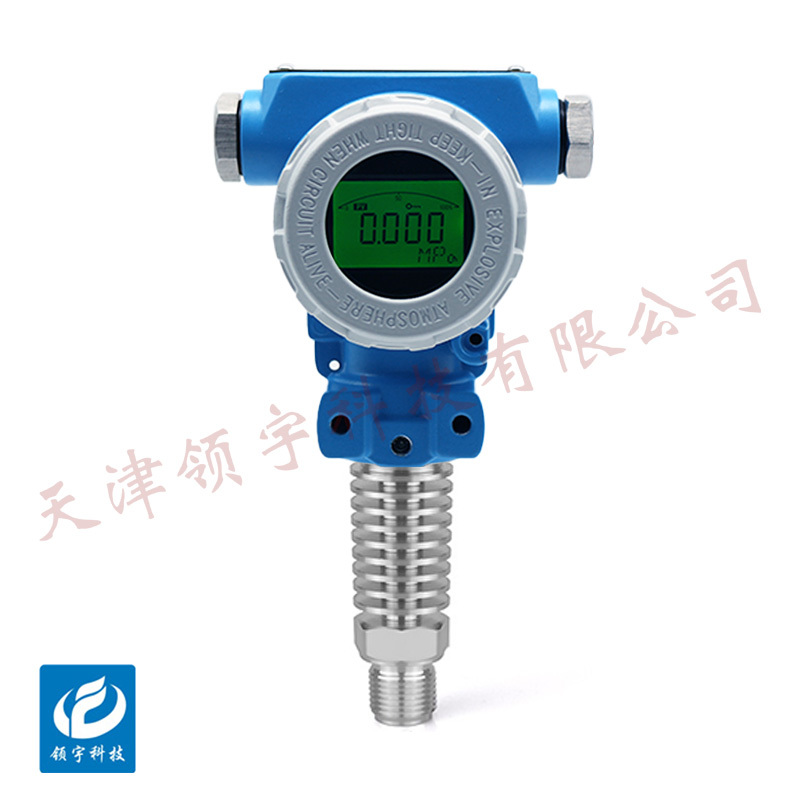
LPT-12 High-Temperature Pressure Transmitter
● Imported core—offers superior performance in harsh environments, making it ideal for low-temperature applications
● Highly stable transmission function—suitable for various industrial environments with stringent stability requirements
● Strong anti-interference capability—Featuring an isolated circuit design, the input and output are electrically separated, delivering remarkable performance even in environments with significant on-site interference.
● Overcurrent/Overvoltage/Polarity Reverse Protection – If field personnel connect wires incorrectly or if abnormal current/voltage occurs due to a fault, the instrument can be effectively protected.
● Strong corrosion resistance—can accommodate a wider range of media by selecting different seals
● Damping Design – Resistant to Pulsating Pressure Impacts
Key words:
Classification:
Download information:
Product Description
Product Overview Product overview
The LPT-12 series high-temperature pressure transmitters are designed specifically for use in high-temperature environments. Compared to industrial-grade pressure transmitters, they share the same core working principle. Notably, these transmitters exhibit excellent temperature performance, enabling stable pressure acquisition and measurement within the range of -30°C to 160°C—thus addressing the limitations of conventional pressure transmitters in high-temperature applications. They are widely employed in industries such as petroleum, chemical processing, power generation, metallurgy, and thermal engineering for measuring the pressure of saturated steam and high-temperature media. Additionally, the transmitters offer versatile output signals that can seamlessly integrate with various industrial settings. Moreover, the product features an RS485 remote transmission function, making it easy to collect and control data over long distances.
Performance Metrics TECHNICAL PARAMETERS
Operating temperature: -30~160℃;
Power supply: 18–32 VDC, typical value: 24 VDC;
Measurement media: Oil, water, gas, and other media compatible with stainless steel
Measurement ranges: Negative pressure type: -0.1 to 0 MPa; Differential pressure type: 0–2 kPa; Positive pressure type: 0–60 MPa; (Custom options available for higher requirements)
Measurement accuracy: 0.25%FS; (Higher accuracy available upon request)
Overload capacity: 2 times full-scale pressure:
Output signal: Two-wire 4-20mA; three-wire voltage output: 0-5V, 1-5V, 0-10V;
Display method: 4-digit LED display (optional);
Communication methods: 4-20mA + HART protocol; RS485;
Load capability: Current type ≤500Ω, voltage type ≥250kΩ;
Threaded interface: G1/4; M20×1.5 (customizable based on site requirements);
Electrical interface: Standard M20×1.5 cable gland, complete with locking nut;
Temperature Drift Coefficient: Within the specified operating temperature range, for every 10°C change in ambient temperature, the output variation is ≤ ±0.05% of the full scale; annual drift < ±0.3%.
Long-term stability: ±0.1%FS/year;
Housing material: Die-cast aluminum, with epoxy resin coating and sealed gasket.
Housing Protection: IP65
Explosion-proof rating: Exd IIC T6
Storage temperature: -40~100°C
Relative humidity: 0–95% RH
External dimensions APPEARANCE OF SIZE
Materials are being prepared...
Installation Requirements INSTALLATION
1. The pressure transmitter can be directly installed on the pipe component being measured. To facilitate installation and maintenance, it is recommended to install a shut-off valve between the pipe component and the pressure transmitter. In environments with significant vibration or shock, a flexible hose can be connected to the pressure transmitter’s fitting to achieve mechanical decoupling.
2. A sealing ring should be installed between the pressure transmitter connector and the pipe fitting or shut-off valve. For flush-head pressure transmitters, the internal thread depth of the pipe fitting or shut-off valve must exceed 25 mm.
3. In general, the pressure transmitter should be installed vertically, facing upward relative to the horizontal plane. During installation, use a wrench to tighten the transmitter by turning the hexagonal nut at its base—avoid directly twisting the upper part of the transmitter.
Note:
1. Do not poke the pressure port with sharp or hard objects, as this may damage the sensor’s pressure diaphragm. Additionally, since the pressure diaphragm is permanently integrated with the housing, it will become irreparable if damaged. Furthermore, product quality issues caused by improper use—such as accidental pressing of the diaphragm, static overloading due to particulate-containing media, or dynamic pressure shocks—are not covered under our warranty. Therefore, users are strongly advised to take extra care in protecting the diaphragm during both installation and operation.
2. For areas prone to frequent lightning strikes, it is recommended to install lightning protection devices along the lines.
Previous Page
Next Page
Previous Page
Next Page
Related Products
Product inquiry
If you are interested in our products, please leave your e-mail, we will contact you as soon as possible, thank you!
Tianjin Ling Yu Technology Co., Ltd.
Operator:86-22-58554679
Fax: 022-58285528
Manager Ding: 86-18902041592
WhatsApp:8618902041592
Complaint Hotline:86-15822286986
Factory Address: No.5 Yingbin Road, Xiqing District, Tianjin
E-mail:sales@lingyukeji.com
Purchasing Department E-mail:lykj_tj@163.com
WhatsApp Scan

Copyright©2022 Tianjin Ling Yu Technology Co., Ltd